Last checked: 15 September 2026. This guide compares cross-border cash-declaration rules in Australia, Great Britain, the European Union and the United States. It is general information, not legal, tax or financial advice.
Someone preparing an international move can hear a rule such as “you have to declare more than $10,000” and reasonably conclude that sending $30,000 or $80,000 through a bank must also require the same declaration.
That is the wrong mental model.
The border rule is usually about physically carrying, mailing or shipping cash and certain bearer instruments across a border. A normal bank or remittance transfer moves value electronically through the financial system. It can still be checked, recorded or reported under anti-money-laundering rules, but it is not the same event and it does not use the traveller’s cash-declaration form.
The practical question is therefore not simply “How much money am I moving?” It is “How is the money moving?”
The four headline thresholds
| Jurisdiction | Headline traveller rule | Important exception |
|---|---|---|
| Australia | Declare physical cash of A$10,000 or more, or foreign-currency equivalent, when moving it across the Australian border | AUSTRAC says money transferred through a bank or money-transfer business does not use this traveller declaration |
| Great Britain | Declare £10,000 or more when carrying cash between Great Britain and a country outside the UK | A family or group is tested on the combined amount; Northern Ireland uses different rules |
| European Union | Declare €10,000 or more when entering or leaving the EU | There is no single EU-wide rule for cash carried only between EU countries; national rules can apply |
| United States | FinCEN Form 105 applies to physical transportation, mailing or shipping of more than US$10,000 in currency or covered monetary instruments | FinCEN states that a transfer through normal banking procedures that does not involve physical transport is not reported on Form 105 |
The thresholds look similar. The legal mechanics are not identical, so using one country’s rule as a shortcut for another can create expensive mistakes.
Australia: A$10,000 is a declaration threshold, not a bank-transfer ceiling
AUSTRAC’s public guidance says that if you carry physical cash worth A$10,000 or more into or out of Australia, including the foreign-currency equivalent, you must declare it. Cross-border rules also cover certain bearer negotiable instruments, with their own reporting details.
The distinction most useful to someone relocating is written plainly in AUSTRAC’s guidance: you do not need to make the traveller declaration when you transfer money through a bank or money-transfer business.
That does not make an A$80,000 international bank transfer invisible. Australian banks, remitters and other reporting entities have their own reporting and anti-money-laundering obligations. AUSTRAC currently maintains international funds-transfer reporting requirements for reporting entities under transitional arrangements. The key point is that the reporting burden is different from a traveller personally declaring physical cash at the border.
Australia also treats deliberate splitting seriously. AUSTRAC warns that dividing a reportable amount among travellers, including family members, to avoid the reporting threshold can amount to illegal structuring.
Official guidance: AUSTRAC — Moving money overseas and AUSTRAC — International funds transfer reports.
Great Britain: £10,000 can be a group total
GOV.UK says you must declare £10,000 or more when carrying cash between Great Britain — England, Scotland and Wales — and a country outside the UK.
One detail is particularly easy to miss when a family is moving together: if the family or group is carrying £10,000 or more in total, a declaration is still required even if each person individually carries less than £10,000.
That means four travellers carrying £3,000 each should not reason that they are all individually below the threshold and therefore outside the rule. Their combined £12,000 matters.
Northern Ireland is different. GOV.UK uses a €10,000 threshold for specified movements involving Northern Ireland and distinguishes between travel with Great Britain, EU countries and non-EU countries. Anyone routing a move through Northern Ireland should check the specific direction of travel rather than applying the Great Britain rule automatically.
Official guidance: GOV.UK — Take cash in and out of the UK.
European Union: €10,000 at the EU border, but internal EU travel is a separate question
EU cash controls require travellers entering or leaving EU territory with €10,000 or more in cash, or the equivalent in another currency, to complete a cash declaration.
For this purpose, “cash” is broader than banknotes and coins. The European Commission includes certain bearer negotiable instruments and specified high-purity gold within the cash-control definition.
There is another trap: the €10,000 rule is an external EU-border rule. The EU’s Your Europe guidance says there is no single EU-wide rule governing cash carried between EU countries. Individual member states may impose their own controls, so a person driving from one EU country to another should check both the departure and arrival country rather than assume “inside the EU means no declaration.”
The EU framework can also reach unaccompanied cash sent by post, freight or courier. Customs authorities can require a disclosure when €10,000 or more of covered cash enters or leaves the EU in that way.
Official guidance: European Commission — EU Cash Controls and Your Europe — Travelling with cash.
United States: the Form 105 rule is about physical movement
FinCEN’s Form 105 instructions require reporting when a person physically transports, mails, ships, causes to be transported, mailed or shipped, or receives covered currency or monetary instruments in an aggregate amount exceeding US$10,000 across the US border.
The same instructions contain the distinction that matters most for movers: a transfer of funds through normal banking procedures that does not involve the physical transportation of currency or monetary instruments is not required to be reported on Form 105.
US Customs and Border Protection also emphasises that the rule is a reporting requirement, not a ban on carrying larger amounts. There is no general border rule saying that US$10,001 is illegal to possess or transport. The danger is failing to report a reportable movement accurately.
Official guidance: FinCEN — Form 105 and instructions and US Customs and Border Protection — currency reporting explanation.
The Better Places Three-Lane Money Move Test
Before moving money internationally, place the transaction into one of three lanes. This prevents a border-cash rule from being mistaken for a banking rule.
- Lane 1 — Physical money: Are you carrying banknotes, coins, bearer instruments or another item that the destination treats as reportable cash? If yes, check the border declaration threshold and definition before travel.
- Lane 2 — Electronic transfer: Is a bank, foreign-exchange provider or licensed remittance service moving the value electronically? If yes, the traveller cash form normally is not the relevant process, but the provider can still require identity, source-of-funds and compliance information.
- Lane 3 — Tax and ownership: Does moving the money itself, selling the asset that produced it, changing tax residence, making a gift or transferring between legal owners create a separate tax or reporting issue? Border cash declarations do not answer these questions.
Each lane asks a different question. Mixing them together is where myths such as “you cannot transfer more than $10,000 overseas” come from.
Scenario: A$80,000 by bank versus A$12,000 in a suitcase
Imagine a household relocating from Australia and needing A$92,000 overseas.
Option A: A$80,000 is transferred from an Australian bank account to the household’s own overseas bank account. Under AUSTRAC’s public guidance, the traveller does not personally make the physical-cash declaration merely because the electronic transfer exceeds A$10,000. The bank or transfer provider handles its own regulatory obligations and may ask the customer for information about the source and purpose of the funds.
Option B: The same traveller boards the flight carrying A$12,000 in physical cash. That is a different lane. The physical cash exceeds Australia’s A$10,000 declaration threshold, so the border declaration rule applies.
Option C: Two people deliberately split A$18,000 into A$9,000 each solely to avoid reporting. That is not a clever workaround. AUSTRAC explicitly warns against structuring to avoid cross-border reporting.
The amount matters, but the method of movement and the reason for any splitting matter just as much.
Reporting does not mean tax
A cash declaration is primarily a transparency and anti-money-laundering measure. Filing one does not by itself mean the money is taxed, confiscated or illegal.
Likewise, not having to complete a traveller cash form for an electronic transfer does not mean there can never be tax consequences. Tax can depend on where the money came from, whether an asset was sold, whether a gain was realised, the owner’s tax residence and the destination country’s rules.
For example, a person selling property after leaving a country can face withholding or filing obligations that arise from the sale itself, not from the later bank transfer. Our guide to selling property after moving abroad deals with that separate problem.
Do not confuse bank safety with border reporting either
A mover holding a large house deposit may also worry about whether the receiving bank is protected if it fails. That is another separate layer. Deposit-protection limits determine how much eligible money may be protected at a covered institution; they are not border-cash thresholds.
We compare those limits in our 2026 house-deposit bank-protection guide.
Seven questions to answer before moving a large amount
- Am I moving physical cash, a bearer instrument, precious metal or an electronic bank balance?
- Which country am I leaving, entering and transiting?
- Does the rule aggregate money carried by my family or travel group?
- Does my route cross an external border, such as the EU’s external border, or only an internal one?
- If I use a bank or remitter, what identity and source-of-funds documents might the provider require?
- Did the money come from a property sale, business sale, investment disposal, gift or inheritance that has its own tax rules?
- Can I document the legitimate source and intended use of the funds if customs or a financial institution asks?
If these seven answers are clear, the “$10,000 rule” becomes much less mysterious.
The decision rule
When moving money abroad, start with the transport method, not the number.
If the value is physically crossing a border in cash or cash-like instruments, check that border’s declaration rule. If the value is moving electronically through a bank or regulated transfer provider, check the provider’s transfer, identity and source-of-funds requirements instead. Then separately check tax, sanctions, foreign-exchange controls and ownership consequences that may apply to your particular transaction.
Declaration threshold ≠ transfer limit ≠ tax bill. Treating those as three separate questions is the simplest way to avoid both unnecessary fear and costly non-compliance.
Official sources
- AUSTRAC: Moving money overseas
- AUSTRAC: International funds transfer reports
- GOV.UK: Take cash in and out of the UK
- European Commission: EU Cash Controls
- Your Europe: Rules for travelling with cash
- FinCEN: Form 105 — Currency and Other Monetary Instruments Report
Method and limitations: official Australian, UK, EU and US material was checked on 15 September 2026. The Three-Lane Money Move Test and A$80,000/A$12,000 scenario are original Better Places Life analysis. Rules can change and additional controls may apply to sanctions, tax, foreign exchange, precious metals, specific instruments or particular countries.
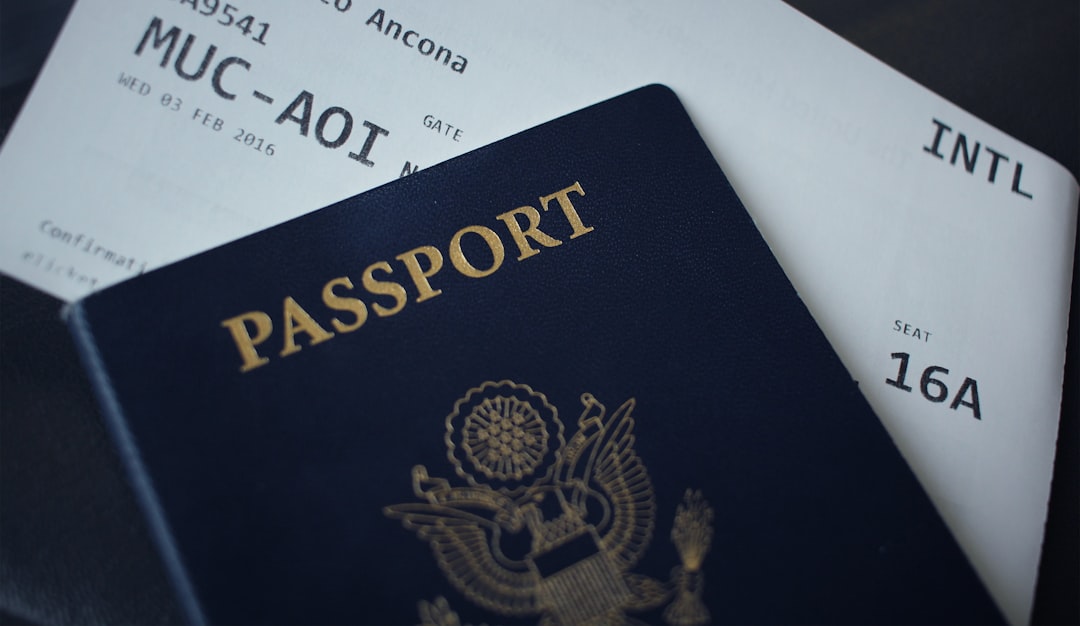
Featured photograph by Nicole Geri on Unsplash.
Leave a Reply